
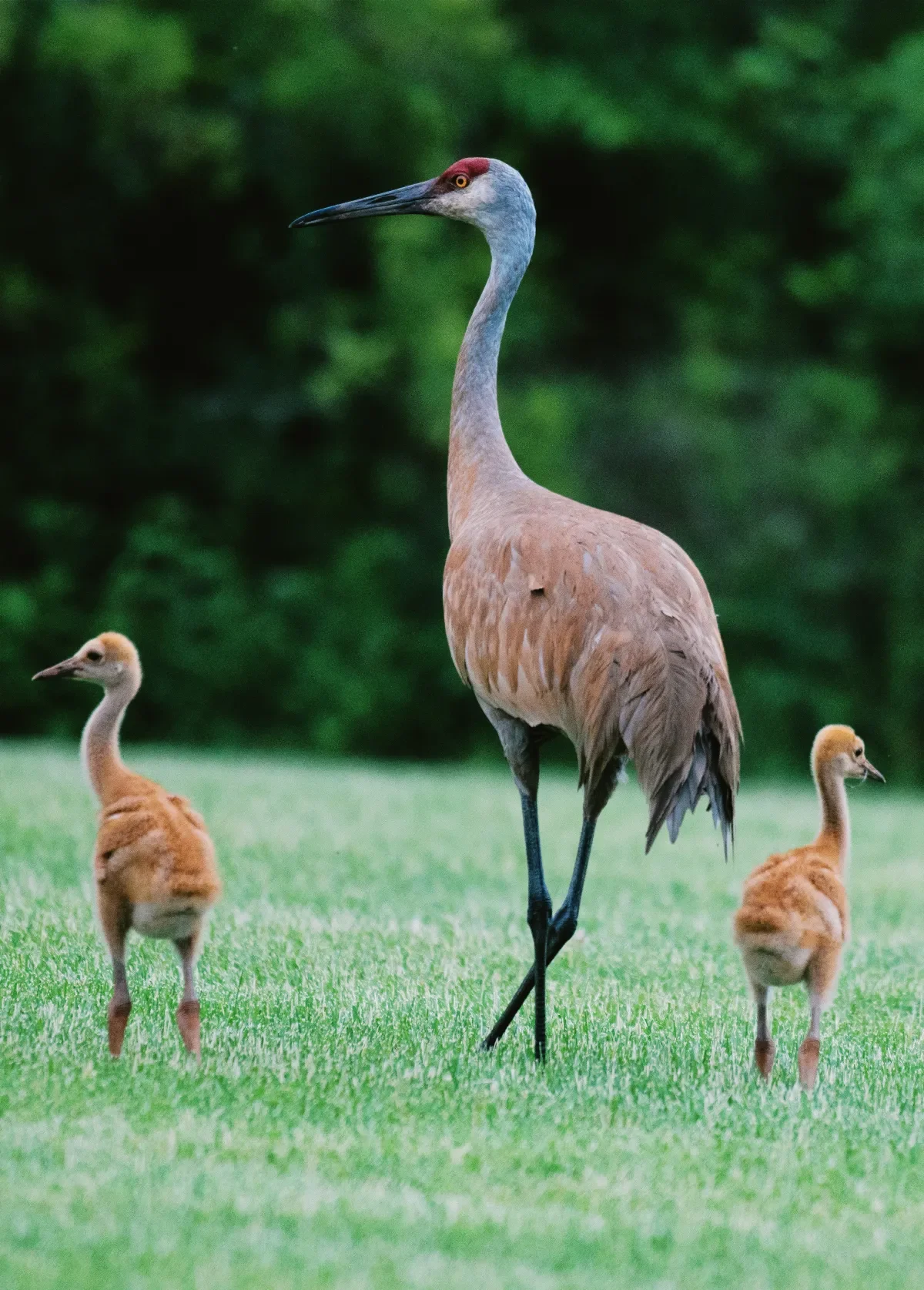
Sandhill Cranes
You have found our Sandhill Crane exhibit at the Baraboo Children’s Museum! Thank you for scanning our QR code!
Here, you will find some brief information about these marvelous creatures as well as links to more detailed research.
Where Do They Come From?
Sandhill Cranes are native to North America (and parts of northeastern Siberia).
Summer Homes: During the warmer months, they nest in open wetlands, marshes, and wet meadows across Canada, Alaska, the American Midwest, and the Pacific Northwest.
Winter Vacations: When cold weather sets in, hundreds of thousands fly south to sunny spots like Texas, Florida, California, and northern Mexico.
The Pit Stop: Every spring, over 500,000 Sandhill Cranes gather along the Platte River in Nebraska to rest and refuel—one of the world's most incredible wildlife spectacles!
Family & Lifespan
Partners for Life: Sandhill Cranes pick one mate and stay together for life (often 20+ years).
Colts: Baby cranes are called colts because they have long, gangly legs and run fast, just like baby horses! They can swim the very day they hatch and leave the nest within 24 hours.
Teamwork: Both parents help build the mound-shaped nest, hatch the eggs, and feed the chicks.
Cool & Quirky Fun Facts
🕺 They Love to Dance: Cranes dance to communicate, bond with mates, or just burn off energy! They leap into the air, flap their giant wings, bow, and toss sticks or grass over their shoulders.
🎺 Bugle Voice: You’ll usually hear a Sandhill Crane before you see one. Their loud, rolling "trill" call can be heard from over 2 miles away, thanks to a long, coiled windpipe inside their chest!
🔴 That Red Patch Isn't Feathers: The bright red spot on top of their head is actually a patch of bare skin. When they get excited or stressed, blood rushes to the area and the red color gets brighter!
🎨 Mud Makeup: In the spring, Sandhill Cranes rub reddish-brown mud all over their gray feathers to camouflage themselves in marsh grass while nesting.
Did you know that Baraboo is home to the International Crane Foundation?
Visit their website for more detailed information and visit them to see these amazing creatures in person!